


GCSE Listening and Appraising - practice question 1
Exam style practice questions suitable for homework and revision


Ten questions with a score fragment and embedded clip, exploring tempo, melody, choir, orchestra, a cappella, solo, soprano and bass voices, stave, timbre, pulse - notes on a line, identifying the highest pitch.
Ten questions with a score fragment and embedded clip, exploring tempo, dynamics, instrumental families, melody, rhythm, treble stave - notes in a space, crotchet and quaver note values, timbre, texture and pulse.
Scales, degrees of the scale, triads, keys and the circle of 5ths.
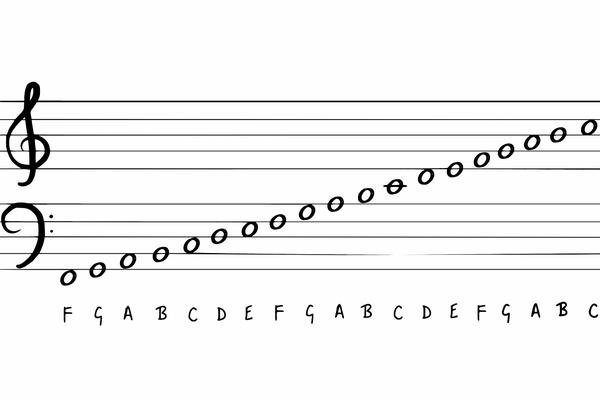
Various permutations of staves
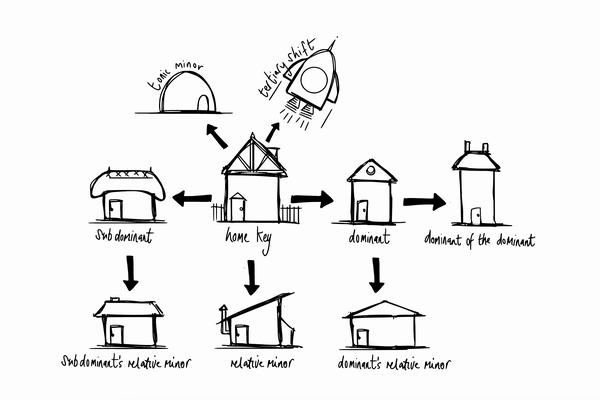
Key connections and common modulations
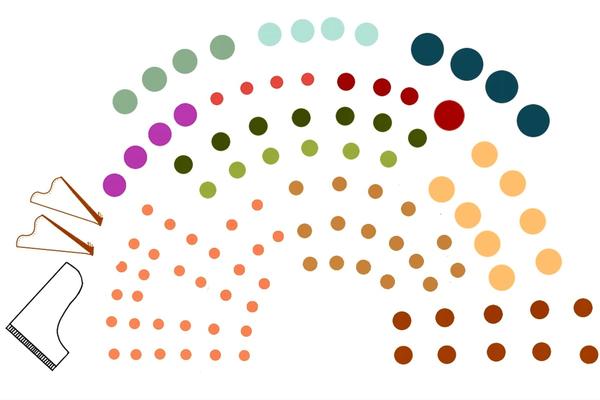
Colour coded orchestral families
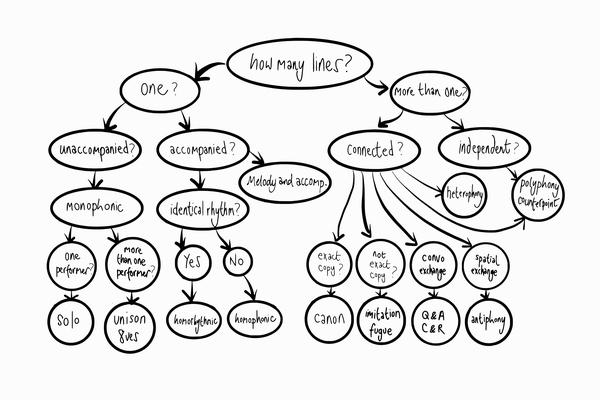
Tool to support the teaching of texture
Six week integrated scheme that focuses on compositional devices found in works by Vaughan Williams, culminating in the creation of an original composition. Lessons are shaped around analytical listening followed by hands-on explorations of a particular device through improvisation, composing and arranging. Each lesson has a connecting homework task, providing opportunities for wider listening and research.
Ten questions with a score fragment and embedded clip, exploring harmonic language, chord content, melodic shapes (conjunct, triadic and sequential movement), ostinato, phrase, sequence, texture (unison, call and response, melody and accompaniment), tempo change.